
The 9th arrondissement of Marseille is not included in any QPV (priority urban area) defined by the National Agency for the Cohesion of Territories. Administrative zoning concentrates indicators of poverty and structural delinquency in the 2nd, 3rd, 13th, 14th, 15th, and 16th arrondissements. This absence of QPV classification serves as the first objective filter for assessing the safety of an area.
Reading the delinquency indicators applied to the 9th arrondissement of Marseille
Data from the Ministry of the Interior for 2024 report approximately 96,800 crimes and offenses in Marseille, which translates to about 110 incidents per 1,000 inhabitants. In 2025, overall delinquency decreases by about 6%, with a notable decline in group violence.
Further reading : Discover the latest innovations and trends in the world of technology
The most serious incidents remain concentrated in a handful of neighborhoods in the 13th, 14th, 15th, and 16th arrondissements, where most drug trafficking occurs. The rest of the city, including the southern arrondissements, shows levels comparable to other major French urban areas.
We observe that the 9th benefits from a geographical position that places it outside the main tension axes. This does not mean a total absence of incidents, but the types of delinquency differ radically from those in the northern neighborhoods. There are more residential burglaries than violence related to drug trafficking.
Further reading : Make me or do me in spelling: never make the mistake again!
To refine this analysis, consulting a map of the zones in the 9th arrondissement of Marseille allows for cross-referencing security data and micro-local breakdowns.
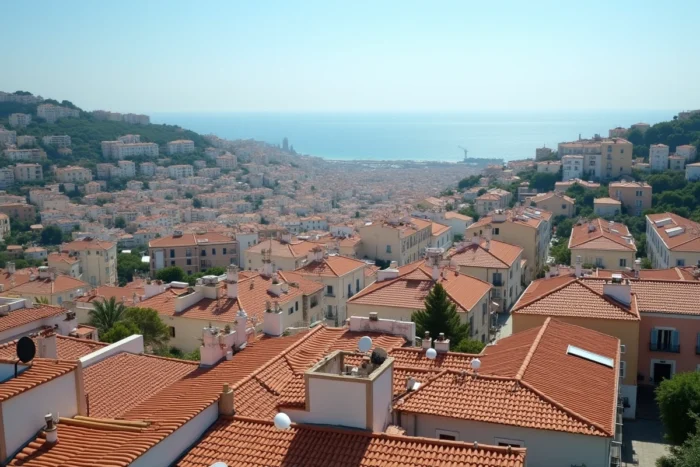
Quiet residential areas of the 9th: Mazargues, Les Calanques, Vieille-Chapelle
The 9th arrondissement covers a vast and heterogeneous territory, from Mazargues to the Calanques massif. Mazargues maintains a dense suburban fabric with a village life that limits urban insecurity phenomena. The proximity to the Calanques National Park enhances residential attractiveness and maintains land pressure that naturally filters the profiles of occupancy.
The Vieille-Chapelle and La Campagne Pastré area remains one of the calmest in southern Marseille. The distance from major roadways and the low population density mechanically reduce exposure to opportunistic delinquency.
The Roy d’Espagne neighborhood, partly composed of 1970s condominiums, presents a different profile. The density is higher, the common spaces more extensive, and reports of petty thefts (thefts in underground parking lots, vandalism) are more frequent than in neighboring suburban areas.
What the commercial network reveals
An often-overlooked indicator in the security analysis of a neighborhood is the vitality of its local commercial fabric. Mazargues has an active commercial core that generates a regular pedestrian flow during the day. This constant human presence acts as a natural deterrent.
Conversely, certain sections of Boulevard Michelet, on the edge of the 9th, feature sparser commercial lines. Areas with low commercial density require increased vigilance in the evening, even in an otherwise peaceful arrondissement.
Occasional friction points in the 9th arrondissement
No arrondissement in Marseille is free from localized tensions. In the 9th, friction points are mainly found around three types of areas:
- The surroundings of certain residences in Roy d’Espagne and La Soude, where the concentration of collective housing encourages nighttime gatherings reported by residents
- Relay parking lots and isolated parking areas near access paths to the Calanques, regularly targeted by car break-ins, especially during the summer
- Transit routes such as Boulevard de Hambourg or the Bonneveine crossing, where road incivilities and snatch thefts are occasionally reported
These phenomena remain nowhere near the structural issues of the northern neighborhoods. We recommend addressing them as risks of opportunistic delinquency, manageable through standard prevention measures (lighting, locking, time vigilance).

Analysis grid to assess the safety of an address in the 9th
Rather than reasoning by entire neighborhoods, we recommend an address-based analysis. Several criteria can qualify the actual level of tranquility of a street or building:
- The presence or absence of QPV within a 500-meter radius (none in the 9th, which is a clear advantage)
- The ratio of collective housing to single-family homes on the neighboring cadastral plot, which correlates with the density of minor incidents
- The distance to fast transit routes (highway ramps, busy boulevards), often associated with car break-ins
- The existence of a neighborhood watch program or an active neighborhood council, indicating local mobilization that impacts perceived delinquency statistics
The 9th arrondissement has several particularly active neighborhood interest committees (CIQ), notably in Mazargues and Baumettes. Their presence reflects an engaged social fabric, a factor rarely quantified but crucial in maintaining a safe environment.
Specific case of Luminy
The Luminy campus, nestled within the Calanques massif, operates as a separate micro-territory. Delinquency there takes a specific form: bicycle thefts on campus, break-ins in vehicles parked on the edge of the park. Assaults against individuals remain rare. The student and sports attendance generates a dense daytime flow that secures the area during the day.
The 9th arrondissement of Marseille stands out for its lack of QPV classification and for levels of delinquency aligned with those of major French urban areas outside trafficking zones. Tensions are localized, predictable, and linked to identifiable urban configurations. Address-based analysis, rather than arrondissement reputation, remains the most reliable method for making residential or investment choices.