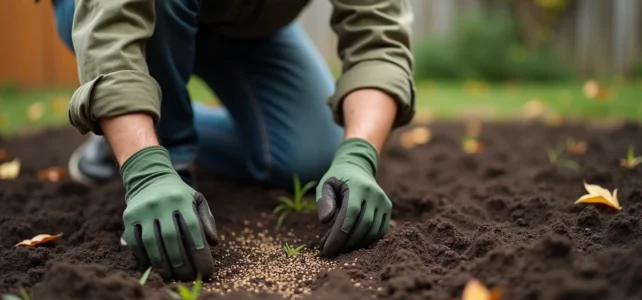
The germination of a grass seed depends on a precise thermal threshold at the soil level. As long as the ground remains below this threshold, the seeds remain dormant, regardless of sunlight or rainfall on the surface. Understanding this mechanism allows for the selection of the right seeding window and avoids unnecessary weeks of waiting.
Soil Temperature and Germination: The Threshold Not Specified on Labels
The most common grass seeds in France (fescues, ryegrass, and poa pratensis) belong to the category of C3 grasses. Their optimal growth occurs between 15 and 24 °C, and they practically stop growing beyond 27 °C. This physiological data conditions the entire seeding schedule.
You may also like : Tips and Tricks for Creating a Harmonious and Soothing Home Interior
In practical terms, the soil must reach at least 10 °C at depth to trigger germination. In spring, this threshold is rarely reached before mid-March in the mildest regions, and rather late April in the north or at altitude. In autumn, the soil retains the heat accumulated during the summer, ensuring favorable temperatures from mid-August.
To know when to sow grass for a lawn suitable for your region, a soil thermometer a few centimeters deep remains the most reliable tool, far more than a fixed calendar.
Related reading : The latest fashion trends to adopt for a unique and modern style
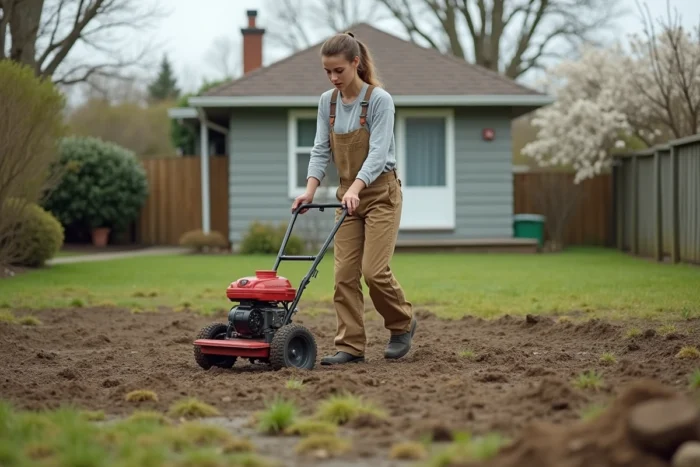
Spring or Autumn Grass Seeding: Two Windows, Two Logics
Spring (March to May) and autumn (mid-August to October) are the two classic seeding periods in France. However, they are not equal.
Why Autumn Remains the Reference Period
Autumn combines residual soil warmth and natural moisture, which accelerates emergence without the need for watering. The young shoots then have several months to develop a deep root system before the first mowings of the following spring. The pressure from weeds is also significantly lower than in spring.
A seeding done between mid-August and the end of September yields the best results in most French regions. In the Mediterranean zone, it is better to wait until early October to avoid the last heat waves.
Spring: An Option Under Constraint
Sowing in spring works, but the useful window is shorter. You must wait for the soil to warm sufficiently while finishing the sowing before the first heat of June. In regions where heat waves occur earlier and earlier, the spring window shrinks year after year.
Spring sowing also requires regular watering during the first weeks, whereas autumn often benefits from sufficient rainfall. This is a factor to consider if your garden is not equipped with an irrigation system.
C3 and C4 Lawns: Adapting Seeds to Drought Episodes
The distinction between C3 grasses and C4 grasses is rarely addressed on consumer seed packets, but it changes the game for regions subjected to long, dry summers.
- C3 grasses (tall fescue, meadow grass, English ryegrass) germinate at moderate temperatures and yellow or become dormant above 27 °C. They are suitable for temperate climates with reasonable summers.
- C4 grasses, offered by suppliers specializing in drought-resistant lawns, reach their optimal growth between 25 and 38 °C. They allow for sowing in late spring or even early summer in the hottest regions.
- Some C4 grass suppliers claim water savings of up to 70% compared to traditional C3 mixes, a significant argument in southern France.
If you are in a Mediterranean zone or in a region regularly affected by watering restrictions, a C4 mix sown in May or June can yield a more resilient lawn than a C3 grass sown in autumn and stressed from the first summer.
Soil Preparation Before Sowing: Steps That Determine Density
Good timing does not compensate for poorly prepared soil. The final density of the lawn depends as much on the quality of the seedbed as on the sowing date.
The soil must be loosened to about fifteen centimeters, free of stones, roots, and plant debris. Raking helps achieve a smooth surface, without dips or bumps where water could stagnate.
After sowing, a light roller ensures contact between the seeds and the soil. This contact is crucial for germination: a seed placed on hollow soil does not germinate, even with abundant watering.
- Loosen the soil deeply, then refine the surface with a rake.
- Sow in two crossed passes for an even distribution of seeds.
- Roll the ground to press the seeds against the soil.
- Water with a fine mist daily until emergence, without over-saturating.
The first three weeks after sowing are the most critical: the soil must never dry completely on the surface. A two-day watering lapse on a spring sowing can jeopardize emergence over entire areas.

Overseeding and Maintenance After the First Mowing
A freshly sown lawn almost always has sparse areas after emergence. Overseeding involves reseeding these gaps a few weeks later, once the majority of the grass has reached a sufficient height for the first mowing.
The first mowing is done when the blades reach about 8 to 10 cm. Set the mower to a high position to cut only one-third of the height. Cutting too short on young grass weakens the seedlings and encourages weed establishment.
Lawn Maintenance Through the Seasons
A suitable fertilizer application in spring and autumn supports the long-term density of the grass. The choice of fertilizer depends on the soil type: clay soil has different deficiencies than sandy soil. In the absence of soil analysis, a balanced lawn fertilizer remains a reasonable choice.
Summer watering, higher mowing height in summer, and occasional overseeding of damaged areas form the three pillars of a lawn that remains dense and green over the years. The initial sowing calendar lays the foundation, but it is the consistency of maintenance that makes the difference over time.