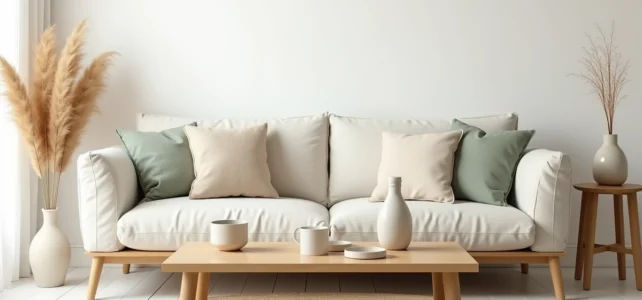
We come home from work, we push the door, and the first sensation that hits us has nothing to do with the color of the walls or the price of the sofa. It’s a matter of flow, light, of what we perceive without thinking. Creating a harmonious and calming interior starts with adjusting these parameters before choosing a fabric or a shade.
Color temperature of light bulbs: the adjustment that decoration ignores
Most guides talk about natural light and curtains. They rarely touch on the detail that changes everything in a living space: the color temperature of light bulbs, expressed in kelvins.
Recommended read : What budget to plan for expanding your home? Estimation and practical tips
A cool white bulb (above 4,000 K) is suitable for a kitchen or a work surface. Installed in a living room or bedroom, it produces exactly the opposite of the calming effect sought. Choosing bulbs between 2,700 and 3,000 K in rest areas radically changes the perceived atmosphere without touching the paint or furniture.
You can go further by varying the sources. A single ceiling light flattens the volumes. Three light points placed at different heights (table lamp, reading lamp, wall sconce) create relief and allow you to adapt the lighting to the time of day. Feedback varies on this point, but a dimmer on the main source remains the most cost-effective addition to modulate the atmosphere of a room.
See also : How to Easily Dismantle a Box Spring: Tips and Steps to Follow
Specialized platforms for layout like happyspace.fr allow you to visualize these lighting combinations before making purchases.
Flow in the room: clear the pathways before decorating
We often buy the furniture first, then look for where to place it. The result: a cluttered living room where we have to navigate around the coffee table, where the armchair blocks the passage to the kitchen. A calming interior starts with circulation pathways that are at least 70 cm wide.
In practical terms, before adding anything, we mentally trace the daily routes in each room. Entry to kitchen, living room to bathroom, bedroom to dressing room. Every obstacle on these routes generates a micro-friction that, repeated dozens of times a day, tires us without us realizing it.
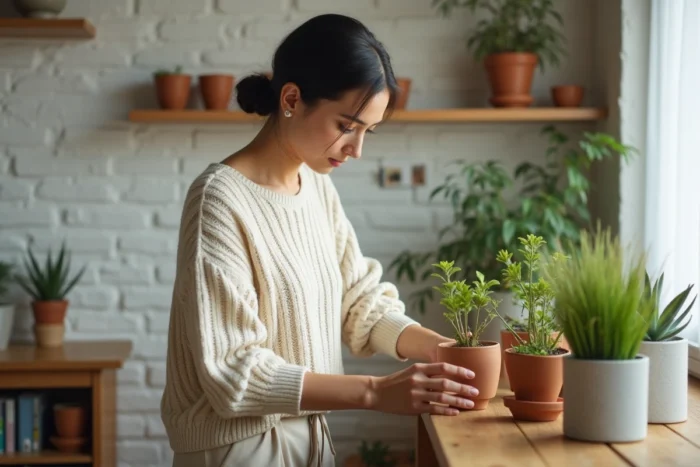
In a dining room, the classic trap is the chair wedged between the wall and the table. You pull it, it scrapes the floor, you push it back awkwardly. The furniture must leave enough space to sit and stand up without gymnastics. If the room is too small for a table for six, switching to four place settings with space around produces a much more pleasant result.
Test the flow before fixing anything
A simple method: lay down tape on the floor to simulate the footprint of a piece of furniture before buying it. Live with the outline for a few days and check that the pathways remain fluid. This step avoids returns to the store and shaky compromises.
Materials and textures to the touch: create a sensory space
The underlying trend for calming interior spaces clearly leans towards the sensory. We are no longer just talking about what we see, but about what we touch. Recent trend analyses confirm the rise of the “Slow Living” movement, which combines natural materials, warm colors, and rounded shapes to promote stress regulation.
This translates into concrete choices in each room:
- In the living room, washed linen on the sofa or cushions replaces smooth polyester, which sticks in summer and slides in winter. Linen wrinkles, that’s normal, and it’s precisely this lively texture that contributes to the calming effect.
- In the bedroom, a short-pile wool rug at the foot of the bed changes the first contact in the morning. The cold floor upon waking is an underestimated sensory stress.
- In the kitchen or dining room, solid wood (oak, beech, ash) brings a warmth that melamine does not replicate. You can feel it to the touch and see it age, which anchors the room in time.
- In the bathroom, natural stone or tadelakt on a sink countertop replaces standardized glossy tiles and absorbs light better.
Varying textures in the same room avoids visual monotony which, paradoxically, creates discomfort. A completely smooth and matte living room tires the eyes as much as an overloaded one.
Calming color palette: going beyond all-white
All-white remains a common reflex when wanting a bright interior. In practice, an entirely white space produces a clinical effect, especially under poorly calibrated artificial lighting.
The colors that work for calming are directly inspired by nature. Sage greens, warm beiges, soft terracottas, and muted blues form a solid base for a living room or bedroom. Limiting the palette to three shades per room (one dominant tone, one secondary tone, one accent) is enough to create coherence without monotony.
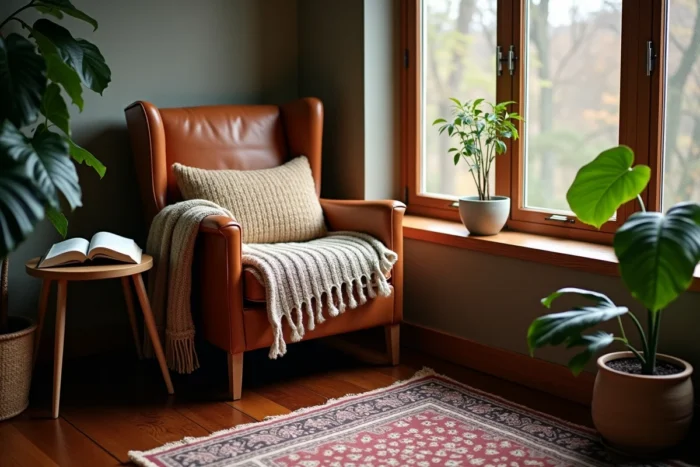
The “Tech-Nature” trend identified for recent interiors pushes towards shades inspired by natural pigments (ochre, clay, olive green) combined with matte finishes. These colors absorb light instead of reflecting it, which reduces visual fatigue at the end of the day.
Apply color without repainting entirely
We don’t always have the option to repaint. An accent wall behind the sofa or the headboard is enough to set a mood. Textiles (curtains, throws, cushion covers) allow you to test a palette before committing to paint. Changing covers costs less than a poorly chosen pot of paint.
Targeted decluttering: keep what serves, store what clutters
Radical minimalism (“throw everything away”) does not suit everyone. A more realistic approach consists of tackling one horizontal surface at a time: the entry table, the kitchen countertop, the coffee table in the living room.
Each visible horizontal surface naturally attracts objects. Mail, keys, phone, trinkets. Beyond three objects placed, the surface stops breathing and begins to visually clutter the room.
- Entry: a closed catch-all and a hook for keys replace the overflowing tray.
- Kitchen: clear the countertop of all appliances used less than once a week.
- Living room: a coffee table should hold only one or two decorative objects and nothing utilitarian permanently.
This surface sorting takes about ten minutes per area and produces an immediate effect on the feeling of space. A calming interior is not empty; it is readable.
The harmony of a space does not rely on a single lever. It is the accumulation of discreet adjustments (light, flow, textures, colors, storage) that ultimately transforms a room into a place where one can settle effortlessly. The most effective approach is to start with the most annoying point of friction in daily life and work from there.