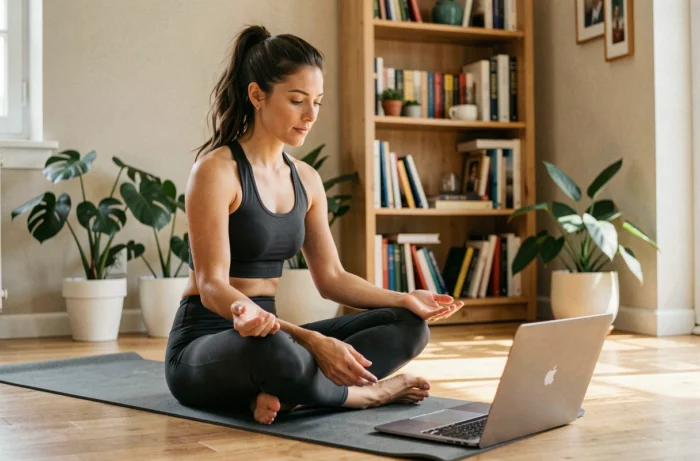
Online sports refer to any physical activity practice supervised or guided by a digital medium: video on demand, mobile application, coaching via videoconference, or automated programs. This definition encompasses both a filmed strength training session and an interactive fitness class followed from a living room. The common point remains the absence of travel to a gym or field, with supervision accessible on screen.
Professional card and legal framework for remote sports coaching
Before choosing a platform or an online coach, a regulatory point deserves attention. In France, paid sports supervision is subject to Article L212-1 of the Sports Code. The professional must hold a recognized qualification and a valid professional card, even when working remotely.
This obligation applies to independent coaches selling personalized programs as well as to employees of platforms. Verification can be done on the public portal of the Ministry of Sports.
The disciplines offered online are numerous, and the catalog continues to expand. On the homepage of Sport en Ligne, there is a panorama that illustrates this diversity well, from cardio boxing to prenatal yoga.
Online sports disciplines: choose according to your physical goal
Not all disciplines engage the body in the same way. Selecting a class based on a specific goal helps avoid dropouts and injuries.
Cardio and endurance
Aerobics, step, and online biking work the cardiovascular system. These sessions rely on rhythmic sequences, often calibrated between twenty and forty-five minutes. Cardio boxing, which combines coordination of punches and continuous effort, also significantly engages the upper body.
Muscle strengthening and fitness
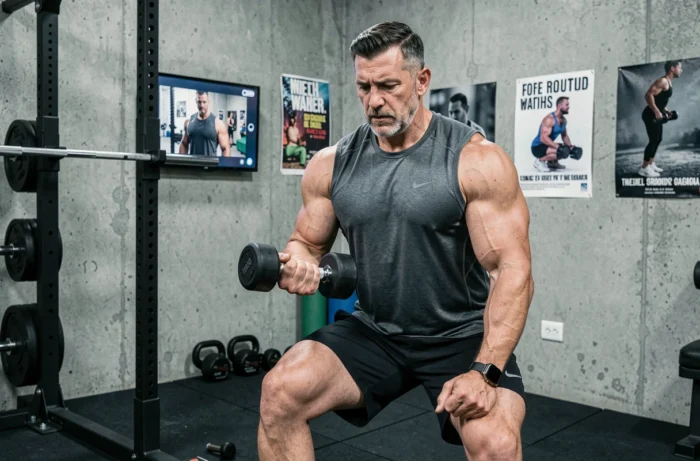
Bodyweight strengthening programs (squats, push-ups, planks) form the foundation of online fitness. Some classes target a specific area (abs, glutes, back), while others offer a comprehensive workout. Bodyweight muscle strengthening remains the most practiced discipline online, because it requires no equipment.
Flexibility, mobility, and well-being
Yoga, Pilates, and stretching routines occupy an increasingly prominent place in the digital offering. These practices are suitable for individuals returning to physical activity or those seeking a complement to intense training.
- Cardio (aerobics, step, biking, cardio boxing): high calorie expenditure, improved endurance, short and intense sessions
- Strengthening (bodyweight fitness, circuits): muscle toning, ability to target specific areas, no equipment required
- Flexibility and mobility (yoga, Pilates, stretching): injury prevention, active recovery, suitable for all levels
- Hybrid disciplines (prenatal fitness, adapted sports): specific supervision for audiences with medical or physiological constraints
Health data protection on sports platforms
Most online sports platforms require filling out a health questionnaire before offering a tailored program. Previous injuries, chronic conditions, ongoing treatments: this information constitutes health data under the GDPR.
A serious platform must limit data collection to what is strictly necessary, obtain an appropriate legal basis, and implement suitable security and retention measures. Reading the privacy policy before filling out a medical form is not a common reflex, but it becomes relevant as soon as one shares health history with a digital service.
This point distinguishes professional platforms from free YouTube channels: the former collect personal data for personalization, while the latter broadcast generic content without interaction.
Hybrid practice: combining online sports and physical training
Online sports are no longer limited to on-demand videos. The market is evolving towards hybrid practices combining applications, connected devices, and personalized coaching. A connected bracelet or watch transmits heart rate data to the coach, who adjusts the session in real-time via videoconference.
This digital-physical combination allows for more precise monitoring than a simple pre-recorded program. Sports training becomes more accurate when practice data informs the coach’s recommendations.

Local authorities are also beginning to integrate digital tools into their sports programs. Some municipalities offer online class slots accessible via their public service platforms, which expands access to physical activity beyond just private gym members.
- Check that the coach holds a valid professional card, even for a videoconference class
- Choose a platform that clearly specifies its health data processing policy
- Alternate between online sessions and outdoor activity to avoid residual sedentary behavior related to screen time
- Test several formats (pre-recorded video, live, individualized coaching) before committing to a subscription
An online class supervised by a qualified professional offers a level of safety comparable to a session in a gym, provided that qualifications are verified and personal physical limits are respected. The digital format removes geographical constraints, but not the need for serious supervision. The most reliable selection criterion remains the coach’s qualification, not the quality of the video production.