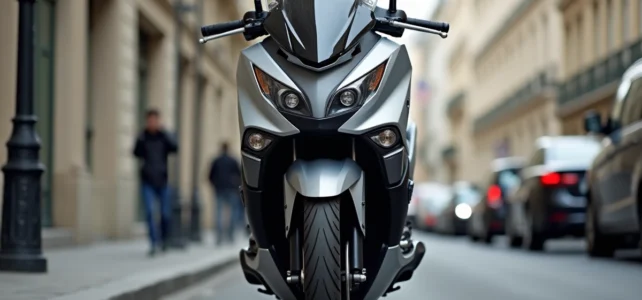
The TMAX in 2026 has a list price that exceeds expectations for a maxi-scooter whose architecture dates back over two decades. The 25th anniversary edition, marketed from €13,999, places this Yamaha in a price range that most thermal competitors do not reach. Understanding why this price holds requires examining mechanisms that are rarely detailed in mainstream analyses.
Displacement Confusion and Perceived Premium of the TMAX
Yamaha has never produced a TMAX 750. The range technically stopped at 560 cm³, and the recurring mentions of a “TMAX 750” stem from confusion perpetuated on forums, classified ads, and certain editorial titles. This imprecision is not trivial: it directly contributes to maintaining a high price.
Related reading : In the Shadow of Tom Selleck: The Fascinating Story of Kevin Selleck, His Actor Son
On resale platforms, sellers position their high-end TMAX 560 (Tech Max, special series) by comparing them to motorcycles with larger displacements. A buyer typing “TMAX 750 price” into a search engine enters a perception tunnel where the scooter is presented as an “ultimate” model, justifying a premium over its direct competitors.
We observe here a rare phenomenon in the two-wheeler market: a displacement myth that artificially inflates perceived value. As long as this confusion persists in the ad ecosystem, sellers have no reason to lower their claims. To better understand the dynamics behind the price of the TMAX 750 in 2026, one must incorporate this perception dimension that weighs as much as the actual technical specifications.
Related reading : Discover the latest innovations and trends in the world of technology

Slow Depreciation of the TMAX in the Used Market
The depreciation of a classic maxi-scooter follows a predictable curve: marked value loss in the first two years, followed by gradual stabilization. The TMAX escapes this pattern. Since 2024, its depreciation has been significantly slower than that of other maxi-scooters in the French market.
Several technical factors explain this resistance:
- The Yamaha twin-cylinder benefits from a reputation for mechanical reliability built over more than twenty years of user feedback, which reassures used buyers and limits downward negotiation.
- Spare parts and accessories are available through a dense network of dealers and specialized resellers, reducing the perceived risk of obsolescence for the buyer.
- The active fleet remains robust: TMAX from previous generations are still widely in circulation, maintaining strong demand for parts, fairings, and consumables.
A three-year-old TMAX resells for a price close to new, a market behavior typically seen in limited-production vehicles, not in a mass-produced scooter. This slow depreciation in the used market mechanically pulls the new price upwards: Yamaha does not need to lower its list price since the secondary market validates the premium positioning.
Euro 5+ Standards and Compliance Costs for Yamaha
The tightening of Euro 5+ anti-pollution standards has led to increased production costs across the entire thermal range. For the TMAX, this regulatory constraint translates into the integration of more sophisticated electronic components (sensors, catalysts, engine management) without fundamentally changing the overall vehicle architecture.
In other words, Yamaha is investing to keep the TMAX compliant without deeply renewing it. The manufacturer passes this compliance cost onto the list price. Therefore, the buyer pays both for the compliance upgrades and the brand premium, without benefiting from a technical overhaul that would visually or mechanically justify the increase.
This mechanism is common among Japanese manufacturers for their long-lasting models, but it is particularly visible on the TMAX because the premium maxi-scooter segment has only a handful of direct competitors. The Honda X-ADV and Kymco AK 550 occupy slightly different niches, leaving the TMAX with a near-monopoly in the high-end urban sport scooter segment.
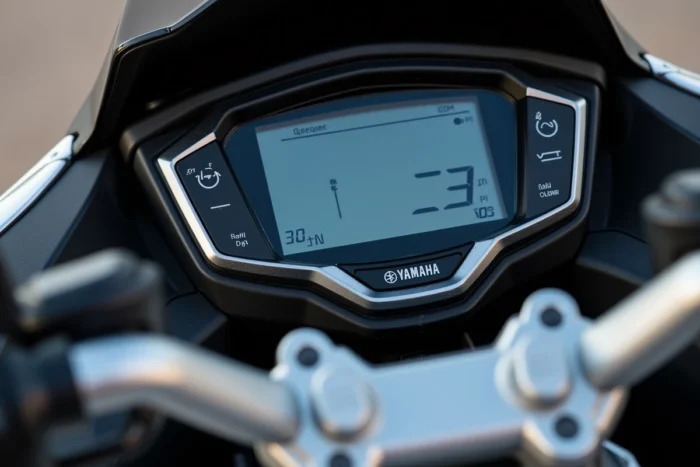
Yamaha’s Range Strategy and the Showcase Effect of the TMAX
The TMAX is not just a commercial product for Yamaha: it serves as a brand image vehicle. The 25th anniversary edition illustrates this logic. By offering a commemorative version at a price even higher than the standard catalog, Yamaha positions the TMAX as both a collector’s item and a means of transportation.
This strategy has a direct effect on the pricing grid. The price of the anniversary version raises the perception of the “normal” price. A TMAX Tech Max priced a few hundred euros lower suddenly seems reasonable by comparison, even though it remains one of the most expensive scooters in the French market.
Yamaha uses the TMAX as a price anchor for its entire scooter range. The XMAX 300 or XMAX 125 benefit indirectly from a premium positioning that their technical specifications alone would not justify. Lowering the price of the TMAX would weaken the entire pricing pyramid.
The insurance market reinforces this circle: premiums for a TMAX reflect its high list price but also its stable resale value. Insurers do not undercut coverage for a vehicle whose residual value remains high, which contributes to anchoring in the minds of owners the idea that their scooter “is worth its price.”
The TMAX remains expensive in 2026 because every link in the chain (manufacturer, dealer, used market, insurer, buyer) has an interest in maintaining this price level. As long as depreciation remains so low and confusion around displacement sustains the myth, no market player will have an economic reason to break this dynamic.